Pool Fencing
Safety-compliant pool fencing that protects your family while enhancing your outdoor space.
Why Pool Fencing Is Essential
Pool fencing is not just a good idea, it is a legal requirement in Georgia that protects children from accidental drowning. The statistics are sobering. Drowning is one of the leading causes of accidental death for children under five, and most incidents happen in backyard pools during brief moments of unsupervised access. A proper pool fence creates a physical barrier that prevents young children from reaching the water when adults are not present. Beyond safety, your homeowner insurance likely requires compliant pool fencing as a condition of coverage, and you could face liability issues if someone is injured in your unfenced pool.
We specialize in pool fence installation throughout Martinez that meets all state and local safety codes while looking attractive in your backyard. Your pool fence needs to meet specific height, spacing, and gate requirements, and we know exactly what inspectors look for. Our installations pass inspection the first time because we follow code requirements precisely. You get peace of mind knowing your family and neighbors are protected by a fence that does its job properly.
Georgia Pool Fence Requirements
Georgia law requires pool barriers that prevent unsupervised access by children under six years old. The fence must be at least 4 feet tall, though we recommend 5 feet for better security and visual appeal. Vertical pickets or mesh cannot have gaps larger than 4 inches to prevent children from squeezing through. If you use horizontal rails, they must be on the pool side to prevent climbing. The critical element is the gate system, which must be self-closing and self-latching with the latch positioned at least 54 inches above the ground or on the pool side of the gate.
Code-Compliant Features We Install
- Minimum 48-inch fence height around entire pool perimeter
- Picket or mesh spacing no greater than 4 inches
- Self-closing gate hardware that closes from any position
- Self-latching mechanisms at required height
- No climbable elements on the outside of the fence
- Proper gate swing direction away from pool
We handle permit applications and inspections as part of our service, so you do not need to navigate the code requirements yourself. Many homeowners choose aluminum pool fencing because it meets all safety codes while resisting rust from pool chemicals and moisture.
Choosing the Right Pool Fence Material
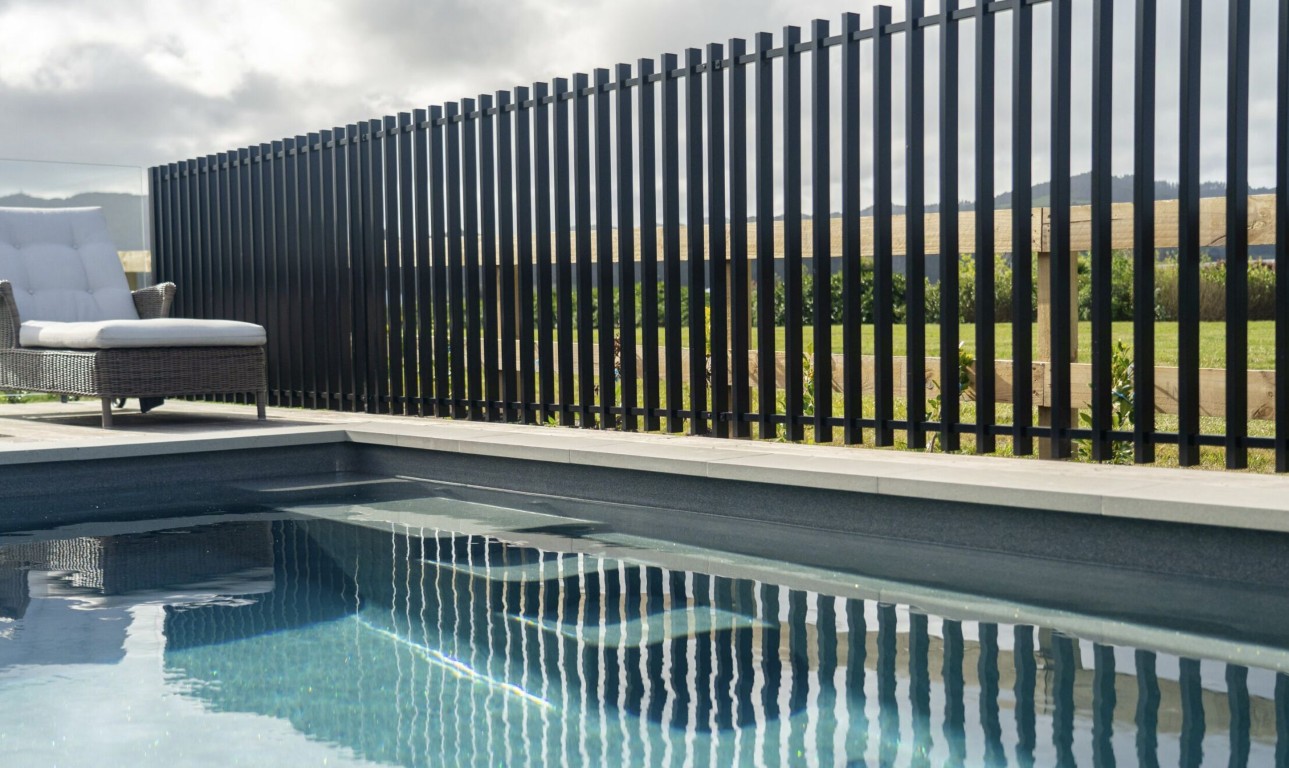
You have several material options for pool fencing, each with distinct advantages. Aluminum is the most popular choice for permanent pool enclosures because it looks elegant, never rusts, and meets all safety codes with standard panel configurations. The powder-coated finish resists fading from pool chemicals and UV exposure. You get a fence that looks great for decades with zero maintenance beyond occasional rinsing. The open picket design maintains sight lines so you can watch swimmers from anywhere in your yard.
Mesh pool fencing offers a removable option that parents appreciate when children are older and the permanent barrier is no longer needed. The tensioned mesh fabric attaches to posts that can be removed and replaced quickly. This works well for seasonal pools or rental properties. Glass panel fencing provides unobstructed views and a modern aesthetic but comes at a higher price point. Some homeowners combine materials, using removable mesh on one section for access and permanent aluminum for the perimeter.
Whatever material you choose, the installation quality matters more than the fence type. We ensure posts are set properly, gates function smoothly, and every detail meets safety standards. Our professional installation process includes a final inspection walkthrough where we test every gate and verify all measurements.